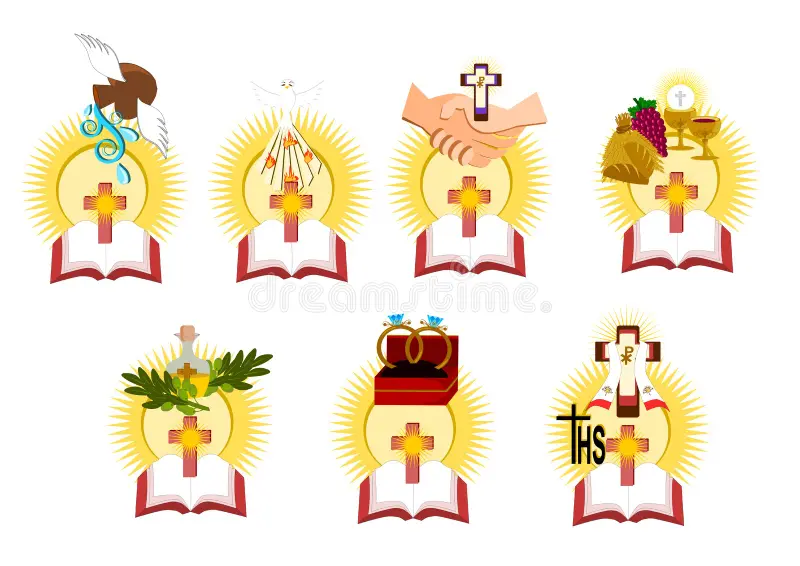
The Sacraments Series — Part 1: The History and Meaning of Sacraments

Do any of you remember the old, child-like game of describing a typical church? You start with interlocked hands and fingers to represent the church; then, you put your two index fingers together to form a steeple Finally, you turn your hands face up while wiggling your fingers around. During the whole routine, you are…

The Catholic Church’s Commitment to Ecumenism

When contemplating the concept of ecumenism in our modern day, it may seem like an impossible reach to imagine a unified Christian Church. With scores of Christian denominations spread out across most countries in the world, ecumenism can appear futile. Yet the Second Vatican Council rose up to the challenge, producing key documents to address…

The Fourth Century: A breakthrough period for the Catholic Church — and an Important Lesson About Its Future

Within the history of Christianity, the fourth century stands out as a crucial turning point — one that forever changed the trajectory of missionary work, Christianity’s role in society, and the Church’s ever evolving ecclesial structure. This paper will explore the combined socio-political, theological, and ecclesiastical factors that formed the blueprint for what is now…

The Catholic Church’s Relationship with Culture

The late Ruth Benedict, a twentieth century anthropologist known for her remarkable contributions to cultural anthropology, once wrote that “the purpose of anthropology is to make the world safe for human differences.”  From what has been covered in this course about Catholic ecclesiology, it can be easy to conclude that the Church frequently spent its…

Why the Early Medieval Era is Key to Understanding Church History and Ecclesiology

As Fr. Richard McBrien rightfully points out in his book, The Church,“the history of ecclesiology covers an enormous amount of biblical, historical, theological, doctrinal, social scientific, and other material” (61), Meaning that studying 2000 years of Catholic ecclesiology is liking drinking several gallons’ worth of water through a firehose, then going all out at an…

Theology Bits: How the Early Christians understood the Holy Spirit’s role in the Church

When looking at the Holy Spirit’s role in the Church, this first means knowing why the Holy Spirit has a role in the first place: Beginning with the Trinity – Father, Son, and Holy Spirit – the triune God, as Christians understand it, bestowed upon humanity a divine revelation: This divine revelation includes an eternal,…

Good God versus Evil God: The Problems with the Marcion Heresy and how the Catholic Church Helped End It

In these modern times, the term “rabbit hole” is used to describe a conversation that can quite easily spill into many different directions. This is usually because all parties in the conversation may have widely opposing views, and that trying to find areas of agreement is often futile at best. The first few centuries of…