How many times have you heard someone say, “I am not a fan of organized religion”? Or “I am spiritual but *not* religious”? Or the usual criticisms about the Catholic Church: “It’s dogmatic, it has a lot of doctrines, it is ‘patriarchal’”? Those views have unfortunately become rather popular in our Western society. And they…
From Catholic to Protestant – to Catholic to Atheist to Catholic again — How I found my way back *home*
It was Spring of 1990. I was rocking a bi-level mullet (“business on top / party in the back”), a short sleeve button down shirt with the sleeves rolled up to make my developing arms look quasi-muscular, a knock-off pair of Docker style Khaki pants, and oversized Nike high tops that were like wearing laced…
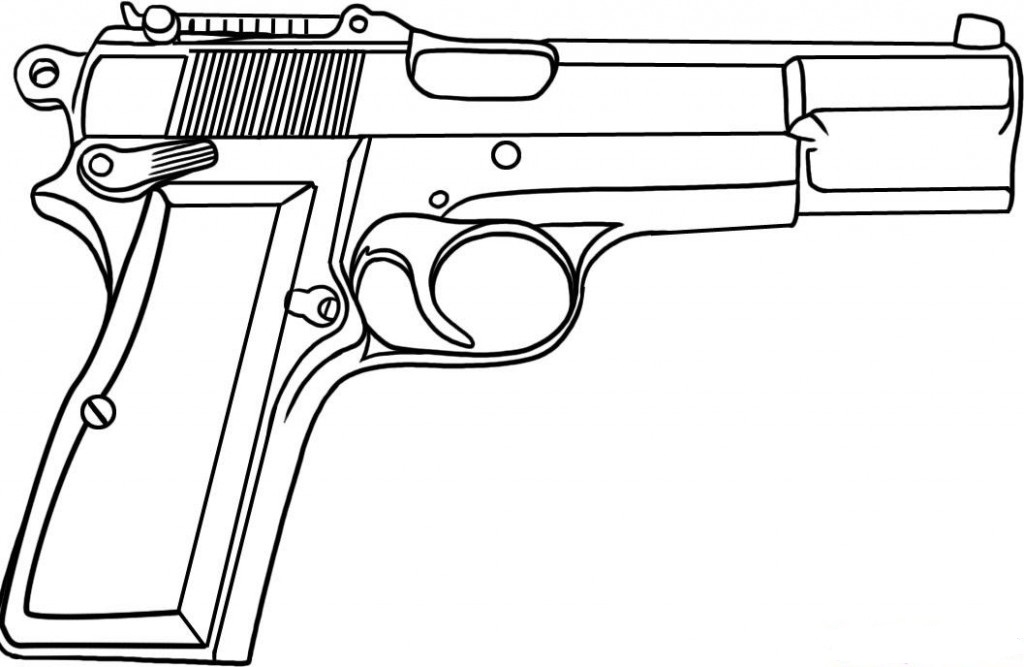
A Short Response to the “Guns don’t kill people — people kill people” argument
Alcohol is much more widely available than guns. Real statistics: Over 50% of murders are committed by people who are intoxicated. Of all the drugs available to us, alcohol — partly because it so readily available, all day, everyday — is the most dangerous drug on the planet. Time and time again, it helps create…
How High Heel Wearing Height Discriminators Have Stomped on Dating and Relationships
I am a single male. The title of this blog may make me sound like a scorned, insecure whiner who is repeatedly rejected by single woman, and now I am exacting textual revenge. And because my height is 5’10”, that may even give more ammunition that I am just a biased crumudgeon. However, aside from…
Exploring Visual Information Processing
Introduction “Nothing is more humbling than to look with a strong magnifying glass at an insect so tiny that the naked eye sees only the barest speck and to discover that nevertheless it is sculpted and articulated and striped with the same care and imagination as a zebra. Apparently it does not occur to nature…
Visual, Spatial, and Verbal Imagery: How They Differ, and Why it is Difficult to Rank Them
The brain is a powerful organ that handles a vast array of cognitive functions. From having its own memory storage system, to processing information from sensory organs, to handling visual, spatial, and verbal imagery – the brain is the primary director of cognition. This article focuses on visual, spatial, and verbal imagery: what each term…
A Short Lesson on Why Forgetting is Not Always Intentional
There are at least a couple of different approaches to this topic, as it is a bit subjective. Any general, sweeping claim can be a problem, as it means the person making the claim has the burden to prove it empirically. Or, in this case, it can be situational. For example, when it comes to…
A Short Lesson on How Perception Becomes Impaired and How to Cope with it
Perception is tightly integrated with our personality type and behaviors, our neurochemical makeup, and the overall nature versus nurture dichotomy. And then there is the cognitive angle. Namely, the senses are not only the input systems for the brain to process the plethora of visual, auditory, tactile, and olfactory information that we receive daily, but…
A Short Lesson on Cognition
Drawing from the textbook definition of cognition — that is, the brain’s ability to receive a sensory trigger and then determine how to process it (elaborate, reduce, store, transform, etc.) — cognitive psychology involves understanding how exactly the brain processes sensory inputs and affects our behaviors. In short, cognitive psychology explains “thinking”. Then, from studying…
Really — What About Bob?
“What about Bob?” “What about Bob???” “What about BOB??!!” The above lines from the movie, What About Bob?, not only share the title’s name, but are a running question that the central characters ask throughout the film. And it begs another question: What exactly is it about the film – and the main character, Bob…